Avocado Salad: A Fresh, Casual Script for Modern Brands
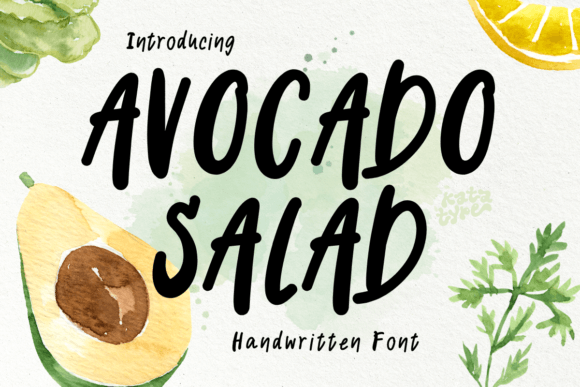
When you first open the font file and type out Avocado Salad, the immediate impression is one of relaxed, contemporary charm. It doesn’t shout. It doesn’t try to be overly ornate or precious. Instead, it offers a confident, flowing rhythm that feels both friendly and deliberately crafted. The letters have a natural, handwritten quality, but with a clear sense of structure—it’s the kind of script you’d want from a designer who can actually draw letterforms, not just mimic a casual scrawl.
The Visual Personality & Where It Belongs
Avocado Salad creates a mood of accessible premium. It’s not formal or vintage. It’s modern, approachable, and slightly organic. This makes it a natural fit for brands that want to feel human and trustworthy without leaning into grunge or extreme whimsy. Think of a local coffee roaster emphasizing quality beans, a sustainable skincare line, an independent pottery studio, or a food blogger focusing on fresh, simple recipes. It would feel out of place in a corporate fintech logo, but perfectly at home on the packaging for a handmade candle or the header of a lifestyle blog.
In terms of project types, its personality directs it toward branding elements where a touch of personal connection is valuable. I see it working exceptionally well for:
- Logo design & brand marks for small businesses, creatives, and craftspeople.
- Product labels & packaging design for goods that celebrate process and material.
- Website headers & blog graphics where you need an inviting entry point.
- Social media graphics & digital ads aiming for high visual engagement in a crowded feed.
- Printable products & Canva templates for digital sellers targeting makers and entrepreneurs.
- Editorial design for pull quotes or section headers in magazines or online articles.
- Invitations & posters for events that are professional yet personal.
Performance in Real-World Design Situations
Once you move past the initial allure and start placing Avocado Salad into actual mockups, its practical character shines. As a display font, it’s meant for prominence. In a logo, even a relatively simple one, the flowing lowercase forms can create a distinctive and memorable mark. I tested it for a hypothetical bakery logo, set beside a clean, geometric sans serif, and the combination felt balanced and complete—the script provided the warmth, the sans provided the clarity.
For packaging, especially on labels for jars, bottles, or boxes, Avocado Salad excels at conveying care. Its strokes are substantial enough to hold up when printed, and the casual elegance suggests a product made with attention. On a social media graphic or digital ad, it immediately draws the eye because it differs from the ubiquitous clean sans serifs, helping to stop the scroll.
A Note on Readability and Hierarchy
This is a script font, and that means respecting its role in your typographic hierarchy. Avocado Salad is highly readable at larger sizes for headlines and short phrases. However, like most scripts, it is not designed for body text. Never use it for paragraphs, descriptions, or any lengthy supporting text. You will compromise readability and likely erode a sense of professionalism. Its job is to attract and set a tone; the job of conveying detailed information belongs to your paired serif or sans serif font.
For audience trust and brand consistency, using Avocado Salad as a primary display element can work very well if your brand’s voice aligns with its mood. It feels honest. It doesn’t come across as cheap or generic, which helps with perceived value. For a creative business, it can enhance recognition because it offers a distinct visual signature without being bizarre.
Where to Use It Carefully
Its strengths are clear, but a professional designer knows that every font has boundaries. Avocado Salad should be deployed with intention.
- Large headlines & short phrases: This is its sweet spot. A brand name, a key headline, a tagline.
- Decorative accents: Single words or even initials used as a graphical element in layouts.
- Premium packaging: Where the tactile quality of the product matches the font’s organic feel.
Use it cautiously, or avoid it, for:
- All-caps settings: Its lowercase flow is central to its character; uppercase can feel disjointed.
- Very small sizes: On business cards or fine print, the details will blur and lose their charm.
- Projects requiring extreme formality or austerity: Its inherent warmth is a mismatch.
Practical Designer Notes Before Committing
Before you finalize a design using Avocado Salad, run these quick tests. They’ll save you from mid-project regrets.
- Test it in black and white first. See how it holds up without color. Does the form remain compelling?
- Check small-size readability. Print it out at the actual size you intend to use, especially for tags or small labels.
- Try it on real mockups. Place it on a photo of a product package, a website header layout, or a social post background. Context changes everything.
- Compare its uppercase and lowercase. You’ll likely prefer the lowercase for most applications.
- Review spacing. Depending on your software, you might need to adjust letter spacing slightly for optimal flow in a logo.
- Test it beside your supporting fonts. Pair Avocado Salad with a neutral sans serif for body text, or a simple serif font for a more editorial feel. Ensure the pairing doesn’t clash.
- Confirm commercial licensing. If this is for client work or a commercial product you’re selling, verify your license covers the intended use. This is a critical, non-creative step.
The Final Judgment for Your Projects
Avocado Salad is a reliable, modern script font. It brings a specific mood to a project—one of friendly, contemporary quality. It’s versatile within that mood, capable of serving from logo design to digital products. For designers, brand owners, and content creators working in spaces that value authenticity and approachability, it’s a strong candidate.
It won’t solve every typographic need, and it shouldn’t. Its value is in its focused personality. Used correctly, as a display element within a thoughtful typographic system, Avocado Salad can become a valuable part of your design assets, helping to build a visual identity that feels both professional and genuinely human.